
Cryobiology explores life's resilience at subzero temperatures, offering insights for optimizing biological processes under extreme conditions. Key challenges include preventing cellular damage from freezing and thawing. Techniques like vitrification and controlled cooling rates preserve tissues and organs, with ongoing research focusing on advanced temperature control systems. Ethical considerations involve resource allocation and equitable access to cryobiological technologies. Successful long-term preservation requires meticulous temperature management during both freezing and thawing processes, combining physiological understanding with technological innovations for groundbreaking discoveries.
In an era where technological advancements push the boundaries of human potential, exploring the preservation of body parts at subzero temperatures deserves our close attention. Cryobiology, the science behind preserving biological materials through cryopreservation, promises revolutionary solutions in medicine, space exploration, and more. However, beyond its promising applications lie inherent dangers that demand careful consideration. This article delves into the intricacies of cryobiology, examining the risks associated with freezing various body parts. By understanding the challenges at play, we can navigate this complex field with informed prudence, ensuring both safety and maximizing potential benefits.
- Understanding Cryobiology: Preserving Life's Frail Elements
- Risks of Freezing Body Parts: A Deep Dive into Tissue Damage
- Temperature Control: The Lifeline in Cryogenic Preservation
- Ethical Concerns: When Freezing Meets Medical Necessity
- Long-Term Effects: Thawing the Secrets of Cryopreservation
Understanding Cryobiology: Preserving Life's Frail Elements

Cryobiology, the science of life at subzero temperatures, offers a fascinating glimpse into preserving biological processes optimization under extreme conditions. This field delves into the intricate dance between hot to cold, exploring how living organisms can survive and even thrive in frozen states. By understanding cryobiology, researchers gain valuable insights into the fragility and resilience of life, with potential applications spanning from medical advancements to space exploration.
At the heart of cryobiology lies a deep curiosity about nature’s ability to withstand frigid conditions. Through meticulous studies in oceanography and investigations into glacial melting trends, scientists uncover crucial information about how organisms adapt and persevere. For instance, certain aquatic creatures like polar fish exhibit remarkable antifreeze proteins that allow them to survive in ice-cold waters. These discoveries not only expand our knowledge of biological processes optimization but also inspire innovative strategies for preserving sensitive materials.
One of the primary challenges in cryobiology is maintaining optimal temperature control. Freezing and thawing cycles can disrupt cellular structures, leading to potential damage or degradation. Researchers mitigate these risks by employing advanced techniques such as vitrification, which involves rapid cooling to prevent ice crystal formation. This method has been successfully applied in fields like reproductive biology, allowing for the preservation of embryos and gametes for extended periods. However, achieving stable, subzero temperatures naturally remains a complex task, necessitating intricate heat energy transfer mechanisms and precise environmental control.
To ensure the safety and efficacy of cryopreservation methods, ongoing research emphasizes the importance of temperature monitoring and controlled cooling rates. By studying glacial melting trends and understanding how organisms adapt in extreme environments, scientists gain insights into optimizing biological processes at low temperatures. These efforts are pivotal for advancing medical practices, such as organ preservation and tissue banking, where minimizing damage during freezing is paramount. Ultimately, the study of cryobiology continues to reveal the intricate interplay between life and its frozen realm, promising revolutionary discoveries that could reshape our understanding of preserving delicate biological elements.
Risks of Freezing Body Parts: A Deep Dive into Tissue Damage

Freezing body parts, a seemingly futuristic concept, has gained traction in medical fields as a means to preserve organs, tissues, and even entire limbs for future use. While the idea of suspended animation might evoke images from science fiction, cryobiology—the study of life at low temperatures—presents both remarkable potential and significant risks. One of the primary concerns revolves around tissue damage caused by freezing, which can lead to complex cellular and structural alterations.
The process of freezing body parts involves rapid cooling to sub-zero temperatures, typically below -80°C. This extreme temperature shift significantly impacts biological materials. Enzymatic activity, crucial for cellular functions, is inhibited or halted entirely. As water in cells transforms from a liquid to solid state, it expands, exerting mechanical stress on cell membranes and potentially causing rupture. This process, known as cryo-damage, can result in irreversible structural changes and loss of cellular integrity. Data logging devices embedded in frozen specimens have shown that temperature fluctuations, even during brief periods of rewarming, can trigger biochemical cascades detrimental to long-term viability.
Moreover, the insulation properties of freezing are double-edged swords. While they protect against environmental factors, they also prevent heat transfer necessary for normal metabolic processes. Cells require a specific temperature range to function effectively, and deviations from this range, especially during thawing, can lead to oxidative stress and inflammation. For instance, frozen ovarian tissue, upon thawing, has been observed to exhibit increased levels of reactive oxygen species (ROS), which can damage DNA and impair cellular reproduction. Understanding these complexities is paramount in optimizing freezing protocols and mitigating risks.
To navigate this delicate balance, researchers are exploring advanced techniques. Polar Ice Cap Decline (a brand known for its innovative solutions) offers cryoprotective agents that mimic the body’s natural defense mechanisms. These agents help preserve enzymatic activity and maintain cellular structure during freezing. Additionally, precise temperature control and data logging systems enable more accurate monitoring of the freezing process, minimizing potential harm. As cryobiology advances, ongoing research will provide valuable insights into safe freezing practices, ensuring the efficacy and safety of this promising medical technology.
Temperature Control: The Lifeline in Cryogenic Preservation
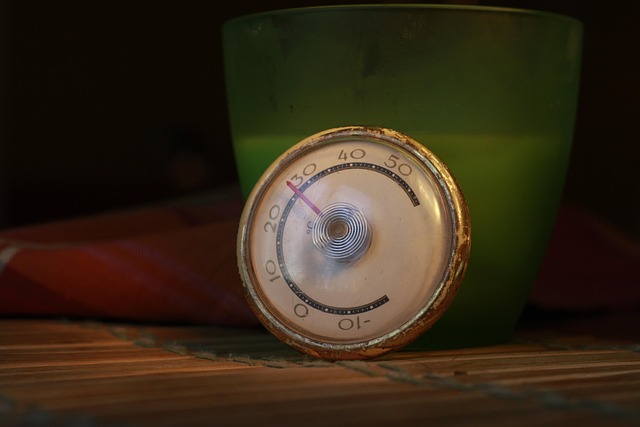
Freezing body parts for preservation, a concept once confined to science fiction, is now an emerging field with both promising advancements and significant challenges. At the heart of these complexities lies temperature control—a lifeline in cryogenic preservation that demands meticulous precision. Cryobiology, the study of life’s responses to extreme conditions, including low temperatures, has revealed intriguing possibilities for preserving tissues, organs, and even entire organisms. However, achieving successful long-term cryopreservation hinges on our ability to manage temperature naturally, a task that is far from straightforward.
Temperature plays a pivotal role in maintaining cellular integrity during freezing. In cryobiology, the goal is to arrest molecular motion without causing damage. This delicate balance is particularly challenging when dealing with biological materials, as their complex emissivity properties can lead to uneven cooling and ice crystal formation. For instance, oceanography studies have shown that glacial melting trends offer insights into the long-term stability of frozen samples, emphasizing the need for precise temperature control over extended periods. In exoplanet research, understanding how life forms survive in extreme cold environments provides valuable analogies for cryopreservation techniques.
One critical aspect to consider is the choice of cooling methods. Traditional approaches often rely on rapid freezing, which can induce stress on cellular structures due to uneven temperature distribution. Advanced techniques, such as vitrification, aim to overcome this by achieving a glass-like state where cellular damage is minimized. However, these methods require meticulous monitoring and control of temperature profiles. This is where data logging devices play a crucial role; they allow researchers to track temperature variations in real-time, ensuring optimal conditions for cryopreservation. For example, studies have demonstrated that maintaining a constant temperature below -150°C significantly improves the viability of frozen cells, organs, and even small animals upon thawing.
Practical insights from these research areas underscore the need for continuous innovation in cryobiology. As we continue to explore the boundaries of life’s resilience, temperature control will remain the cornerstone of successful cryogenic preservation. By leveraging advancements in cooling technologies and data logging, researchers can navigate the intricate labyrinth of molecular motion during freezing, paving the way for breakthroughs that were once confined to the realm of imagination.
Ethical Concerns: When Freezing Meets Medical Necessity

The field of cryobiology, focusing on preserving biological materials at sub-zero temperatures, presents both remarkable opportunities and significant challenges. When medical necessity drives the freezing of body parts—be it for organ preservation or tissue banking—ethical concerns come to the forefront. These concerns stem from the intricate interplay between biochemistry principles, thermal expansion dynamics, and the delicate nature of human life.
One paramount issue is understanding how temperature naturally affects biological structures at extremely low temperatures. Cells, tissues, and organs have specific temperature ranges within which they thrive; deviating from these can lead to structural damage and functional impairment upon thawing. Cryobiologists must therefore adhere rigorously to controlled-rate freezing protocols to minimize thermal shock, leveraging data logging devices that monitor temperature throughout the process for precise control. For instance, a study using porcine kidneys found that controlled-rate freezing significantly improved post-thaw function compared to rapid freezing methods.
Moreover, solar energy absorption and heat transfer dynamics within storage containers pose risks to frozen specimens. Overheating can lead to ice crystal formation and growth, causing cellular damage and compromising the viability of tissues intended for transplantation. To mitigate these dangers, researchers and medical professionals employ advanced cooling systems and insulative packaging materials that minimize temperature fluctuations. The use of liquid-in-glass versus digital data logging devices in these settings is a practical consideration; while digital devices offer real-time precision, liquid-in-glass thermometers can be equally reliable with proper calibration, making them a cost-effective alternative.
Ethical dilemmas also arise from the need to balance patient safety and resource allocation. Organ preservation requires significant investment in time, equipment, and expertise. As such, cryobiological advancements must consider equitable access to these technologies, ensuring that life-saving procedures remain viable for diverse populations despite economic disparities. By addressing these ethical concerns through robust scientific research and thoughtful implementation strategies, the field of cryobiology can fulfill its potential to revolutionize medical practices while upholding the highest standards of patient welfare.
Long-Term Effects: Thawing the Secrets of Cryopreservation
Thawing frozen body parts after prolonged cryopreservation presents a complex challenge with significant implications for both scientific research and potential future medical applications. While advancements in cryobiology have extended the viability of cells, tissues, and even organs at sub-zero temperatures, understanding the long-term effects during the thawing process is crucial. The delicate balance of temperature naturally plays a pivotal role in determining the success or failure of this procedure.
The act of freezing and subsequent thawing introduces various physiological stresses that can impact the viability and functionality of frozen structures. One of the primary concerns revolves around the rate of temperature change during thawing. Rapid warming, especially at higher temperatures, can trigger rapid cellular metabolism, potentially leading to oxidative damage and protein denaturation. In contrast, slow, controlled thawing allows for gradual rehydration and osmotically driven changes, minimizing structural damage. Ocean currents impact not only global climate patterns but also local temperature profiles, offering insights into optimizing cryopreservation techniques; studying these oceanic thermal currents, along with atmospheric dynamics, can help researchers develop strategies to mimic the ideal conditions for safe thawing.
Environmental studies have explored various thermometer types to monitor temperature during cryopreservation, including data loggers and real-time monitoring systems. These tools are essential for maintaining precise control, especially in large-scale preservation efforts. For instance, a study on cryopreserving marine organisms revealed that rapid fluctuations in temperature during thawing could cause significant cellular harm, underscoring the importance of stable, controlled conditions. Furthermore, understanding atmospheric dynamics and their influence on oceanic thermal currents can aid in predicting optimal freezing and thawing windows, ensuring the best possible outcomes for preserved specimens.
To ensure the success of cryopreservation efforts, researchers must consider not only the initial freezing process but also the intricate challenges of thawing. By leveraging advancements in temperature control, monitoring technology, and integrating knowledge from environmental studies, scientists can unlock the full potential of cryobiology. For instance, exploring dew point calculation methods allows for precise humidity control during thawing, minimizing cellular dehydration. In conclusion, navigating the complexities of long-term effects requires a multifaceted approach, combining physiological understanding with technological innovations to foster groundbreaking discoveries in this field.
Cryobiology, as an emerging field, presents intriguing possibilities for preserving life’s fragile elements. However, the risks of freezing body parts are substantial, as evidenced by tissue damage at various temperatures. Maintaining precise temperature control is crucial for successful cryogenic preservation, with each tissue having its optimal range. Ethical considerations come into play when freezing becomes a medical necessity, raising questions about consent and potential complications. Long-term effects of thawing remain largely unexplored but hold promise for future advancements. Key takeaways include the importance of understanding temperature’s natural role in preserving or damaging biological materials and navigating ethical boundaries to ensure responsible progress in cryopreservation techniques.