
Maintaining proper refrigerator temperature (37-40°F / 3-4°C) is key to food safety and freshness. This slows bacterial growth, prevents spoilage, and extends shelf life up to 50%. Adjust settings based on food types & storage zones, considering humidity and ventilation. Regular maintenance ensures optimal preservation, aligning with environmental sustainability goals. Consult owner's manual or experts for precise adjustments tailored to your refrigerator model.
In the realm of food preservation, understanding how to set your refrigerator temperature is a game-changer. The optimal temperature not only extends the shelf life of your perishables but also ensures they maintain their quality and safety. However, navigating the ideal settings can be a challenge, as even small variations can significantly impact your food’s freshness. This article provides an authoritative guide to help you master this crucial aspect of kitchen management, ensuring your refrigerator works as efficiently as possible to preserve your foods naturally.
- Understand Ideal Temperature Ranges for Food Safety
- Determine Optimal Settings for Different Food Types
- Adjust Temperatures Based on Refrigerator Type and Age
- Incorporate Science: How Temperature Affects Food Preservation
- Implement Simple Tips for Consistent, Efficient Cooling
Understand Ideal Temperature Ranges for Food Safety

Maintaining the correct refrigerator temperature is a critical aspect of food preservation, ensuring your groceries stay fresh and safe to eat for longer periods. Understanding the ideal temperature ranges is the first step in achieving this goal. The United States Department of Agriculture (USDA) recommends keeping your refrigerator at or below 40°F (4.4°C) to prevent harmful bacteria from growing. This temperature range significantly impacts food safety, slowing down spoilage and the proliferation of pathogens like Salmonella and E. coli.
While 40°F is the benchmark, it’s essential to recognize that temperature control involves more than just setting a number. Convection currents within your refrigerator play a vital role in distributing cold air evenly, ensuring every corner remains at the optimal temperature. Laboratory techniques and temperature sensors are now commonly used to monitor these conditions accurately. For example, some advanced refrigerators employ multiple temperature zones, allowing for precise control over different compartments, which is ideal for storing various food types.
Relative humidity also influences preservation, especially for certain foods like meat and produce. Maintaining a relative humidity level between 30-40% can help prevent excessive drying or moisture loss, common causes of spoilage. Regularly checking and adjusting your refrigerator’s temperature settings, along with proper ventilation and airflow, will contribute to optimal food preservation. Visit us at homeostasis regulation for expert advice tailored to your specific refrigerator model and dietary needs.
Determine Optimal Settings for Different Food Types
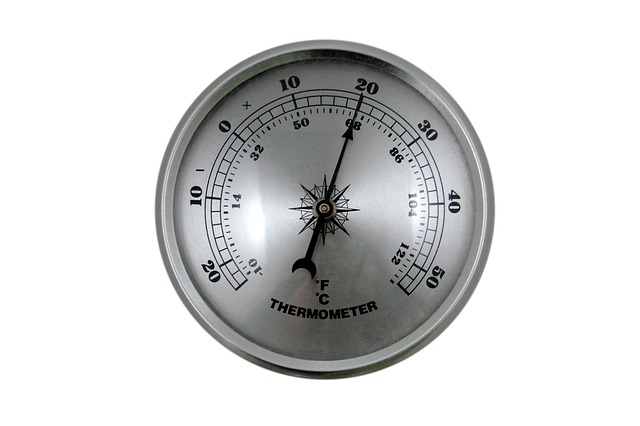
Setting your refrigerator temperature correctly is a crucial step in maintaining optimal food preservation. Different food types require distinct temperature ranges for ideal storage. For instance, dairy products thrive between 35°F and 40°F (1.7°C to 4.4°C), while fruits and vegetables often prefer slightly warmer temperatures, around 32°F to 38°F (0°C to 3.3°C). It’s essential to recognize that temperature naturally varies with altitude; areas at higher elevations experience a significant drop in temperature, which can impact food preservation. For instance, regions above 3,000 feet (914 meters) often require refrigerator settings adjusted for these sea level rise implications.
Meat and seafood necessitate lower temperatures to inhibit bacterial growth, typically 32°F to 38°F (0°C to 3.3°C). Freezing foods at suitable temperatures is equally vital; metal properties play a role here as well, with some metals expanding or contracting based on temperature changes. Properly managing these factors ensures food stays fresh longer. A simple method to check your refrigerator’s effectiveness is by using temperature sensors, like those offered by laboratory techniques—a call to action for those serious about precise control.
Remember, optimal temperature settings vary according to food types and environmental conditions. Adjusting your refrigerator accordingly minimizes spoilage and maintains the quality of your groceries. For instance, keeping a close eye on these details can prevent the waste of perishable items, saving you both time and money in the long run.
Adjust Temperatures Based on Refrigerator Type and Age

Adjusting refrigerator temperatures based on your unit’s type and age is a key factor in achieving optimal food preservation. Refrigerators come in various configurations, from top and bottom freezers to side-by-side models, each with its own unique temperature control characteristics. Older refrigerators may lack advanced temperature regulation features found in modern units, making precise adjustments crucial for maintaining a consistent cold environment.
Solar energy absorption plays a significant role in refrigerator performance. Direct sunlight exposure can impact internal temperatures, particularly in models without effective insulation properties. To mitigate this effect, consider the placement of your refrigerator—place it away from windows or sources of direct sunlight. Additionally, regular maintenance, such as cleaning the coils, ensures optimal heat energy transfer, enhancing temperature control. Stargazing observations have shown that even slight variations in temperature can accelerate food spoilage, emphasizing the importance of precise regulation.
Age is another critical factor. As refrigerators age, their components may degrade, affecting temperature consistency. Older models might require more frequent adjustments to maintain ideal preservation conditions. Regular monitoring and calibration ensure your refrigerator meets modern standards. For instance, a study found that properly adjusted temperatures can extend food shelf life by up to 50%, underscoring the tangible benefits of optimal regulation.
For expert guidance on specific model adjustments, give us a call. Our team is equipped to provide tailored advice based on make, model, and age, ensuring your refrigerator works efficiently to preserve freshness.
Incorporate Science: How Temperature Affects Food Preservation
The science behind food preservation reveals a profound connection between temperature and spoilage. Understanding how temperature naturally influences microbial growth is key to optimizing your refrigerator’s settings for maximum freshness. Lower temperatures slow down enzyme actions, including those that facilitate bacteria and mold proliferation. This principle guides the recommended chilling ranges for various foods—a strategy honed through centuries of culinary tradition and microbiological insights.
Refrigerator temperature control involves balancing factors like the gas laws and their relationship to pressure and volume changes in sealed containers, which can alter perceived temperatures inside the fridge. Converting units between Celsius, Fahrenheit, and Kelvin is crucial here; each degree represents a measurable shift that affects preservation dynamics. For instance, chilling foods from room temperature (typically 25°C) to 4°C can significantly slow down bacterial growth rates.
Stargazing observations over the centuries have informed our understanding of temperature’s role in food preservation, leading to practical insights like keeping dairy products at below 4°C to prevent spoilage. Today, science and technology empower us to fine-tune refrigerator settings with precision. However, remember that “one size doesn’t fit all.” Different foods have unique sensitivity curves to temperature variations. For instance, raw meat should be stored at or below -18°C (0°F) to inhibit microbial activity effectively.
To ensure optimal food preservation, regularly check and calibrate your refrigerator’s temperature settings. In a world where sea level rise implications demand responsible resource management, optimizing refrigeration is not just about extending food life—it’s also an eco-conscious choice, reducing waste and the environmental impact of frequent grocery runs. Find us at sea level rise implications for expert advice tailored to your specific needs.
Implement Simple Tips for Consistent, Efficient Cooling
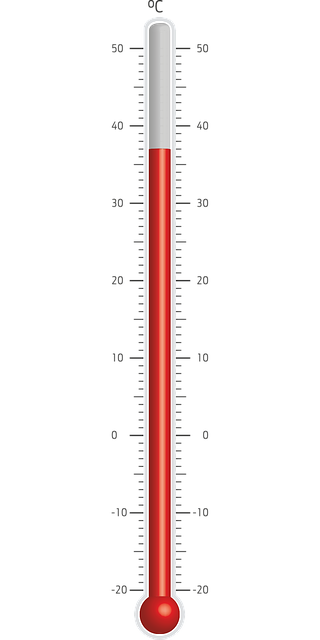
Setting the optimal temperature for your refrigerator is a key element of food preservation, with significant implications for safety and quality. The ideal range typically hovers around 37 to 40 degrees Fahrenheit (3-4 degrees Celsius), a sweet spot that balances energy efficiency and effective cooling. This precise temperature control is no mere coincidence; it’s rooted in the gas laws and their relationship to heat energy transfer, as well as insights from culinary science that account for global climate patterns.
Achieving consistent, efficient cooling involves understanding how these scientific principles play out in your kitchen. For instance, keeping your refrigerator door closed minimizes temperature fluctuations by preventing warm air from entering and cold air from escaping. This simple tip, often overlooked, can significantly impact energy usage and food preservation. The heat energy transfer between your fridge’s interior and the surrounding environment is governed by the laws of thermodynamics, dictating that lower temperatures slow down chemical reactions, including those that cause spoilage.
To optimize this process, consider placing perishables in areas where cool air flows naturally. In many refrigerators, there are dedicated zones: a colder top shelf for items like dairy and meats, and warmer areas near the door for produce. This strategic placement not only ensures even cooling but also extends the shelf life of your groceries, reducing food waste. If you suspect your refrigerator isn’t maintaining the ideal temperature naturally, consult the owner’s manual for adjustments or give us a call at medical thermometry cooking temperatures—professional guidance can be invaluable in fine-tuning your fridge’s performance.
By understanding ideal temperature ranges for various food types and adjusting your refrigerator’s settings accordingly, you can significantly enhance food preservation. Key insights include tailoring temperatures based on your refrigerator’s type and age, incorporating scientific knowledge about how temperature impacts food decay, and implementing simple practices for consistent cooling. This strategic approach ensures the safety and freshness of your groceries, saving you time, money, and promoting responsible food management.